[Comprehensive News] The Indonesian government is steadfastly advancing its "downstreaming" strategy for mineral resources and is consistently achieving significant results. With the deepening enforcement of the nickel ore export ban, global capital's enthusiasm for investing in Indonesia's integrated nickel-iron smelting and stainless steel industries has surged to unprecedented levels. A complete industrial chain—spanning from laterite nickel ore to high-end stainless steel products—is rapidly emerging across the archipelago.
Policy-Driven Efforts to Capture Resource Value-Added
Indonesia possesses the world's richest nickel ore resources. To transform this resource advantage into industrial development and economic strength, the government under President Joko Widodo has vigorously promoted the "downstreaming" policy. Its core lies in banning the export of raw ores and mandating that investors establish local smelters for processing, thereby converting minerals into higher-value products.
"We can no longer simply be a raw material exporter," Indonesian Investment Minister Bahlil Lahadalia has repeatedly emphasized. "The goal of downstreaming is to position Indonesia as an indispensable manufacturing powerhouse within the global supply chain, not merely a supplier."
This clear national strategy maps out a definitive roadmap for global industrial capital: to access Indonesia's nickel resources, one must bring investment, technology, and employment, and engage in deep local processing.
Investment Boom Surges, Industrial Chain Becomes Increasingly Integrated
Guided by this policy, an investment boom led by both domestic and foreign companies is vigorously unfolding across Indonesia, particularly within the "nickel industrial parks" on Sulawesi and Halmahera islands.
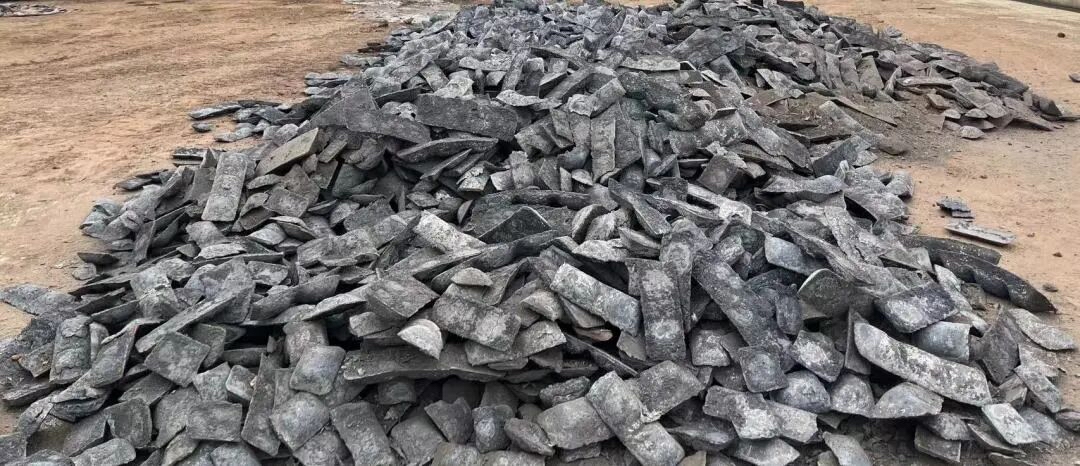
International giants represented by China's Tsingshan Group and Huayou Cobalt, alongside South Korea's POSCO, have invested heavily in constructing massive integrated bases encompassing nickel mining, nickel-iron smelting, and stainless steel production. Within these parks, high-temperature smelting furnaces operate day and night, transforming laterite nickel ore into higher-value nickel pig iron, which is then melted into stainless steel slabs and hot-rolled coils.
Indonesia has now rapidly ascended to become the world's largest producer of nickel pig iron and a significant supplier of stainless steel. This investment wave has not stopped at stainless steel but is extending further into the field of new energy battery materials. It is attracting companies to invest in projects for ternary precursors and nickel sulfate used in electric vehicle batteries, aiming to seize a commanding position in the future market.
Notable Economic Effects Amidst Persistent Challenges
The downstreaming policy has delivered tangible economic benefits to Indonesia: Foreign Direct Investment (FDI) has repeatedly hit record highs, and export value has grown substantially—stainless steel products have become one of Indonesia's most important non-oil and gas exports. Concurrently, the establishment of large-scale industrial parks has created numerous jobs and spurred the modernization of local infrastructure.
However, this process also faces challenges. Rapid industrial development has raised concerns regarding environmental impact and social responsibility. Furthermore, uncertainties in the global market and trade policies from regions like the European Union towards Indonesian stainless steel introduce variables for the industry's future development.
Outlook: From Resource-Rich Nation to Industrial Power
Analysts believe that through the downstreaming of nickel resources, Indonesia has successfully demonstrated to the world its determination and pathway towards industrialization. As the industrial chain continues to deepen and expand, Indonesia is steadily transitioning from a mere exporter of mineral resources into a crucial global production base for metals and new energy materials.
Indonesia's "nickel story" has become a classic case study in economic transformation for resource-rich nations globally. Its successful experience is expected to be replicated for other advantageous mineral resources like bauxite and tin in the future, comprehensively propelling Indonesia's industrialization and modernization process.